Showing posts with label death. Show all posts

Wednesday, July 3, 2013

Mail to Ryan…Our Beautiful Boy - Just Because He Breathes - Learning to Truly Love our Gay Son…


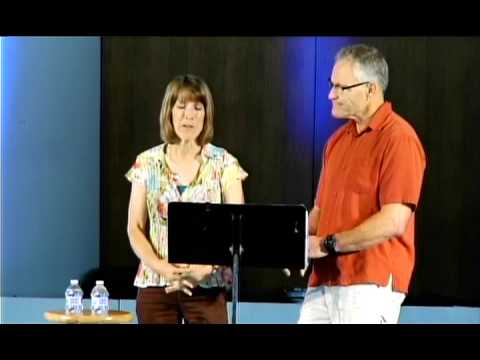
My husband, Rob, wrote this letter to Ryan as part of our expanded “Just Because He Breathes” presentation for Exodus International. The video below was shown in our presentation, after Rob read this:

Dear Ryan,

I miss you so much. I don’t really know how heaven works because you might already know everything I’m about to say but just in case you don’t there’s some things I want you to know. I love you so much and it hurts so bad that you were not here last weekend to celebrate Riley’s wedding with us. We all missed you so much. Riley and Abby left an empty place for you, and Lindsey was the only bridesmaid who walked unescorted down the aisle, because you should have been with her. Even though the day would have been difficult for you in some aspects, you would have been so proud of your brother. And I know that you would just ADORE Abby. Your handsome face and easy laugh would have made the day complete for me.

That said, I am not angry that you relapsed on that day In late June 2009. I know you did not intend to let things get out of hand like they did. In fact I would not be bitter or angry even if you had taken your life. I have nothing but compassion and respect for how well and how long you battled your difficulties. Only now by reading your journals, do I more fully realize how much pain and difficulty you were facing. Whenever I feel like I need a good cry, all I have to do is to pull them out and it puts me in touch with the deep pain you were in…and how, as your earthly father, I let you down in many ways.

I am so very, very sorry for the things that I did to contribute to your despair. I so desperately wish that I had known back then what I do know now. I thought I was so right when you first came out to us. Little did I know how much I had to learn. Please forgive me for letting fear control my decisions and the way I responded to you, instead of faith. I should have trusted God, who loves you so much more – and better – than I do, and who never stopped chasing after you.

I so regret how slow I was to truly understand and love you without any conditions.

But you always had such grace for me. You were so patient with us while we learned what really mattered.

Thank you for trusting us with your deepest thoughts and fears and sharing so much of your experience as a gay teen, and a gay young adult, attempting to reconcile his faith with his sexuality. Thank you for all your letters and emails; the ones that made us laugh and the ones that made us cry. Your handwritten letters are priceless to me.

I so wish that I could introduce you to some of my dearest friends now, men and women who love Jesus with their whole hearts. They have helped me to understand that gay is not a deal breaker for God…that gay and Christian can co-exist, and that God isn’t wringing His hands over this issue. He is way bigger than this. I know that God did not reject or abandon you, or anyone else.

I wish I could take you to dinner tonight and tell you all the ways that your life…and even your death…blesses ours every day. We have learned so very much from you. God, through you, has opened up a whole new world for mom and I.

I wish we could make that snowboarding trip to Mount Baker that we had planned.

I wish you could see how we’re still using the zip line you designed. I will never forget the joy on your face as you concocted yet another way to creatively fly across our back yard.

I wish I could take you backpacking again, and that we could talk and talk and talk as we hiked.

I wish you were here to have backyard bonfires, and to come up with ever increasingly crazy ways to alarm our neighbors.

I wish you could call and tell me all about it when you met a guy you were interested in…and that I could meet him, too.

I wish that we could have a barbeque on your roof, with the view of the Space Needle that we loved so much.

I wish we could ride down the driveway together…one of us on my rip stick and one on my long board…and that we could teach each other new tricks as we laughed and crashed.

I wish you were here to help me hunt the raccoons that threaten to eat our Janie cat…I will NEVER forget the time you pegged that one 30 ft up in the tree in our front yard, and then 20 seconds later, got the second one on your first try.

I wish you could cook your specialty eggs in our kitchen, adding that fire sauce, while you sang funny songs and worship songs and whatever else came to mind. I miss your voice.

I wish you were here in the audience, sitting with Larissa and Cam and Lindsey and Grandma Pat and Uncle Ronny and Uncle Don and all our new friends from Biola Queers, who I know you would love so much.

I wish I could hold you again.

I love you, Ryan.

I miss you. Oh, how I miss you.

I am so very, very proud of you.

I am sorry for EVER wanting you to be anyone other than who God made you to be. I am so very sorry for all the things I said that caused you to feel that I would love you more if you were straight.

I know now that you were EXACTLY who God intended…and that you were BEAUTIFUL.

You were, and will always be, my beautiful, beautiful boy…

We showed this video to accompany the letter during our presentation:
 
********************************************

Thursday, May 2, 2013

Deathbed Singers, Threshold Choirs, Grow To Comfort Sick And Dying

 Deathbed Singers Threshold Choirs


WASHINGTON -- Always face the person in the chair. Sense their breath, the rising and falling of the lungs, the blood's flush on the cheeks. Watch the loosening and tightening of the muscles, the movement of the eyelids, how the hair on their arms straightens up. Don't stand out. Speak softly. Blend in with the voices.

This was the advice of Ellen Synakowski to members of the Washington, D.C., Threshold Choir, only a few months into its existence. Their job: to use song to comfort the dying through the end of life.

As if repeating a mantra, they sang in unison as they rehearsed: "It's alright, you can go/ Your memories are safe with us/ It's alright, you can go/ Your memories are safe with us."

"Words are good for many things, but they don’t seem sufficient when it comes to death. The feelings are just too deeply intense and words are too inadequate," said Synakowski, a 55-year-old former academic journal editor who has always had a hobby of singing, whether it's to the car radio or in a community chorus. "But music … music can reach those places where words alone can’t go."

Death used to happen solely at home or in a hospital, with company limited to family, close friends and clergy. Solemn music would be reserved, perhaps, for the funeral. But as the options for the end of life have grown to include hospice, palliative care and other avenues that recognize not only physical but also emotional and spiritual well-being, Synakowski and like-minded volunteers are offering another service to the dying: soothing through a cappella song.

Each week, Synakowski and between five and 10 people gather around an imaginary bed to practice original songs written for the dying. The D.C. circle formed in January, and is one of the newest in a little-known, mainly U.S.-based network that began in Northern California 13 years ago and now includes dozens of groups across the country.

In the years before launching the choir, Synakowski was a theater critic, a parenting newspaper staffer and an editor at a physics journal. Now an aspiring creative nonfiction writer, she spends her days memorizing songs, calling hospices and hospitals to gauge their interest in deathbed singers, and placing ads seeking members in coffee shops, churches and newspapers. But it's not easy to find volunteers and she's just started to look for friendly care facilities that may house those who are dying and willing to listen.

"Do not initiate touch. If someone reaches out to you, you can respond," she told the men and women gathered to practice in April in a massage school classroom in a nondescript, concrete office building that donated its space. It was a Wednesday night, and the singers, most in their 20s and 30s, had rushed in from their day jobs. They included a legal secretary, a massage therapist and an acupuncturist. "If someone asks you for water, or to adjust them in their wheelchair or bed, we can't," Synakowski said. That's up to the nurse. They are singers, and singers only.

As if it were a worship service, she opened the meeting with a testimony, reading a letter from a woman who recently had another choir in California sing to her ailing mother who is in her late 80s. The students had never performed for the ill or dying, and they needed encouragement and inspiration.

"When you came to our church and sang, I had more energy than I have had in many months. When you and the choir sang to my mom, I felt your singing was able to hold a space open that we all fear. That 'space' could be death or just the struggle of sickness, and when it's held open like that, we are less alone in it...When you sang, your voices had a kind of wisdom of being in dark places or feared places ... My mom told me the feeling overwhelmed her, while you were all singing to her, of not being afraid to die."

The D.C. choir practices for 90 minutes each week at the Potomac Massage Training Institute, where Synakowski is also a student. Laureen, the acupuncturist, joined after seeing a flyer at Starbucks seeking people who could "communicate kindness" with their voices. Becca, the legal secretary, had taken a class at the massage school, through which she met Synakowski. She brought her friend Leah, who has wanted to work with the dying ever since her brother died of cancer.

It will take six months, possibly up to a year, before the choir can reach its goals: having each member memorize 30 songs, and reaching enough understanding of the dying process and the effect sound can have during it, including receiving hospital and hospice volunteer certification.

For now, they prepare.


Ellen Synakowski launched a Threshold Choir in Washington, D.C. in January.

Synakowski's husband and one or two men come to each rehearsal, though most Threshold Choirs are made up of only women. They're located in nearly every major American city, and meet once or twice a month to practice. Each choir varies in its style and composition, though the majority skew older than 50 on average. They visit by request only to hospitals, hospices and private homes. The service is free, and because of limited resources, the groups usually don't advertise unless they are just getting started. Oftentimes, it's a chaplain, social worker or doctor who asks for them.

Four to six singers will go to a bedside, and they pick songs based upon what a patient or the patient's family wants. The tunes can be slow or upbeat, and emotional or lighthearted, like "Take Me Out to the Ballgame," though most are original. At first, choirs sing two or three songs to gauge a person's response. Sometimes, the recipient will move a finger, mouth a "thank you" or will change their breathing and relax their muscles. At the end of life, when human functions began to slow and cease, the signal for "I like this" can be as simple as a blink. Sessions last between 15 to 45 minutes, depending on the patient.

Family members are given song sheets so they can join in or continue after the singers are gone, though choir members themselves prefer memorization. The lyrics aren't religious, and are meant for those who may be spiritual but don't follow a strict dogma. It's rare for a choir member to witness a patient's last breath. Most people prefer to die alone or in the presence of family, say singers who have performed at deathbeds.

So far, Synakowski can sign just 10 pieces from memory. And while she has attended choir workshops in New York and Ohio, she has yet to sing to the dying. Searching fruitlessly for a choir since moving to D.C. nearly four years ago, she became tired of waiting and recently launched her own. Maybe she hadn't sung to the dying before, she thought, but she loved to sing, was taught by the pros and felt at ease with death.

When the D.C. singers gather, Synakowksi doesn't just train them in music, but peppers them with questions about the end of life. What role does song play in transitions? What do they want to hear in their last week alive? The aim is to steer their minds toward thinking about the death that will soon surround them, and to weed out the uncomfortable. She starts by sharing her own experience.

Growing up in Lincoln, Maine, she sang in nursing homes with her Girl Scout troop. She went to her first funeral, for her aunt who died of ovarian cancer, when she was in third grade, and has vivid memories of the open casket and the raw grief in her rather stoic family. She was in her high school's chorus, and was in a gospel choir as an adult until one of her vocal chords started to get chronically swollen about six years ago, making it tiring to sing for extended periods.

When her father died of a septic aneurism back home in 2000, she joined her siblings and mother in touching him, holding his cheeks, his legs and his feet, though she never thought to sing. When her mother was dying eight years later, Synakowski remembers rushing during the two-hour commute from the Bangor airport to her childhood home and spontaneously breaking out into song: "Swing low, sweet chariot/ Comin' for to carry me home." While singing, she got a call that her mother had died. It was one of the first times she realized "the transcending energy of music," she says.

"I feel almost responsible to show up and do this because I understand not being (alive)," she says.

Syankowski first heard about death choirs six years ago, when she lived in the San Francisco Bay Area, where the family moved for her husband's job as a physicist. She came across the idea the way most people do: through word-of-mouth. But between work and taking care of two kids, it wasn't until recently that she could manage the time to get involved.

Kate Munger founded the Threshold Choir organization in 2001 in El Cerrito, Calif., and teaches workshops nationally about how to sing to the ill and dying. Today, 100 Threshold Choirs exist in the U.S. and Australia.

There are 19 choirs in Northern California, the epicenter of the deathbed singers' movement. They're each aided in one way or another by Kate Munger, the founder and executive director of Threshold Choir. A 63-year-old daughter of a minister who lives in Inverness, Calif., 40 miles north of San Francisco, she's a lifelong singer and former elementary school music teacher.

Munger, too, remembers the first time she realized the power of song at death. It was early November in 1990, when her close friend Larry was dying of AIDS.

"I found myself doing chores all morning and was supposed to sit by him in the afternoon, but was terrified when the time came," recalls Munger. "He was comatose but agitated."

She was upset, afraid and confused. So she did what she always did in times of trouble: She sang.

"I sang the same song for two-and-a-half hours. As soon as I started singing, he started to calm," she says. The song was Gail McDermott’s "Hello, Moon:" "There's a moon/ There's a star in the sky/ There's a cloud/ There's a tear in my eye/ There's a light/ There's a night that is long/ There's a friend/ There's a pain that is gone/ Long are we waiting awakening/ Long are we singing this song."

It took until 2000, and many years between of learning to read, write and teach music to kids, for the first choir to begin, in El Cerrito, Calif. Its first client was a terminally ill friend in her 50s with Lupus. Split into small groups, the original 15 members sang to her weekly in the nine months before she died, and she gave them feedback. Soft, blended voices felt better, she explained. Singers learned to read her body language. Even the smallest twitch of a limb could mean she was enjoying or put off by the music. At her death, they sang to her for hours on end.

Today, Munger leads Threshold Choir full-time as a registered nonprofit. It has a small part-time staff, 100 chapters across the U.S. and one in Australia, and a repertoire of 500 original songs written in a dozen languages. Most are no more than two minutes long, and have been composed at annual camps that members organize in Northern California. The most recent one in April at a retreat center in Sonoma County drew 140 women. The titles of songs written and sung during those five days invoke wonder, ease and tenderness: "Welcome Home," "May Peace be with You," "What Light Do You Shine in the World."

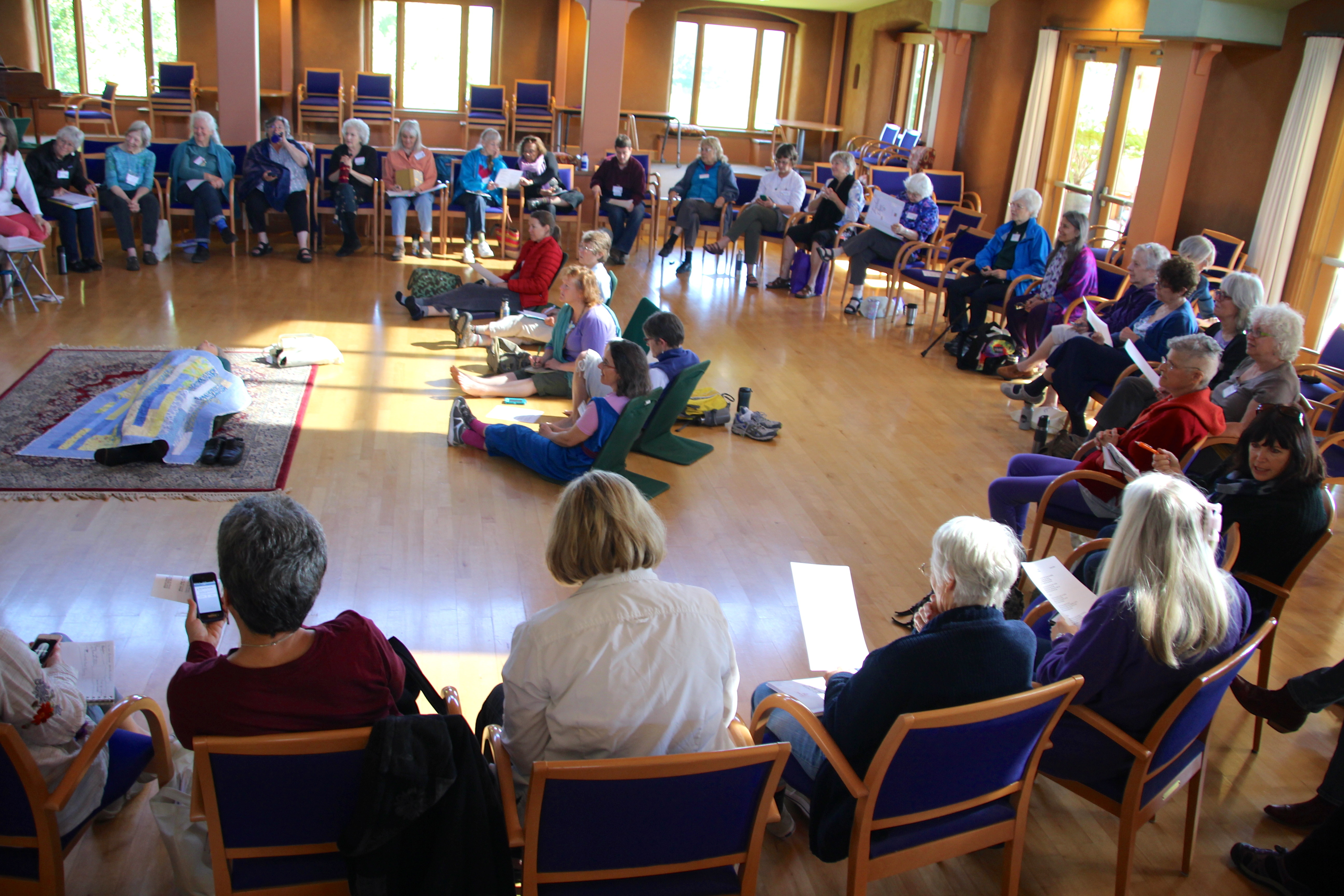
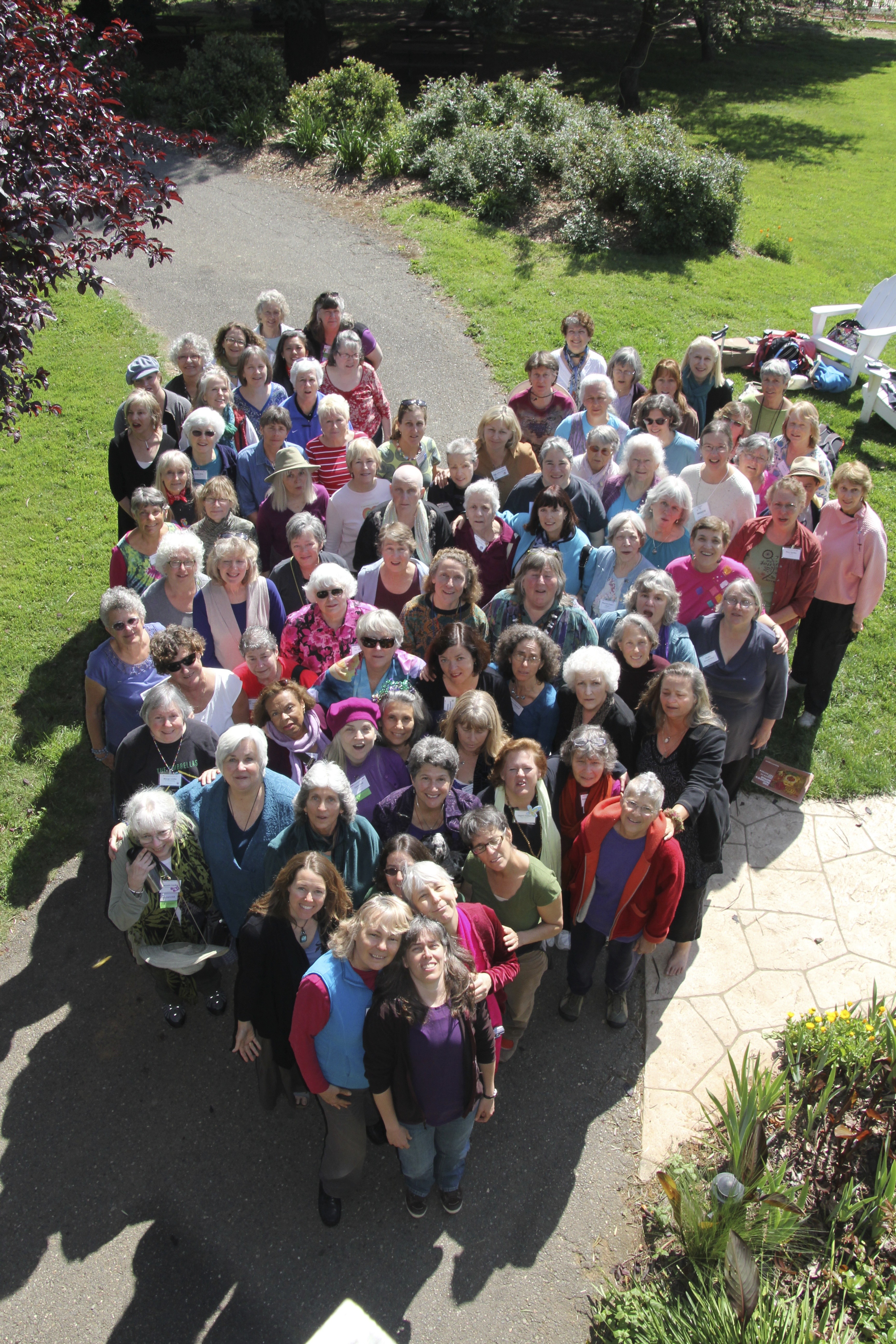
In early April, 140 Threshold Choir singers gathered for five days at The Bishop's Ranch, a retreat and conference center in Healdsburg Calif., for the network's annual gathering, where they wrote and sang new and old songs.

"There is no audition process to join. All I ask is that you feel the shiver when you hear about our work," says Munger. "A mother's heartbeat is the first sound that each of us hears. It feels to me that women's bodies are the guardians of life entering this world and it feels right that we will be guardians of the gate out."

Experienced soloists are discouraged from taking part because they would take the attention away from the patient. Instead, Munger, Synakowski and other choir leaders encourage those who like to sing but lack professional experience to join. It's easier to teach them to mix their voices into the group's, sing softly and focus on the dying instead of themselves. ***

The Threshold Choirs' ultimate purpose may not be a creative one, but one that's psychosocial. One of the hardest parts of dying, say those who have been at bedsides or been close to death themselves, is not pain but of the unfamiliar -- of a stopping point -- even for those who believe in an afterlife. Feelings of guilt and regret, too, can stress the body and mind.

While bedside singers may be unique in American culture, it's not unprecedented. In some Hindu and Buddhist practices, hymns are sung near those who are dying, while mantras are chanted into the ear at the moment of death. In the Middle Ages, French Benedictine monks became famous for establishing infirmaries across Europe for the terminally ill, where they used Gregorian chants to soothe the dying. In more advanced hospitals and hospices around the nation, music therapists are employed to use instruments, such as harps, to calm the ill. And an emerging academic and medical field, music thanatology, is studying the effects frequency and tone have on a dying person, from changes in heart rate, temperature and respiration to better sleep and reduction in stress. Studies that have scanned brain waves near the time of death have indicated that hearing is one of the last senses to be lost.

"Our culture is coming to a great awareness of the role of song and music when it comes to pain, death and grief," says Joy Berger, who teaches in the music therapy program at the University of Louisville and is the director of education for Hospice Education Network.

Diana Sebzda, the director of bereavement at the Karen Ann Quinlan Hospice in Newton, N.J., says she has often seen music used for terminally ill patients. It seems "to bring about a sense of peace to the dying by calming down their terminal restlessness and for the family bedside," she says. "Often, the hospice team will request the music continue to play, even after the loved one has died, because it helps create an emotional environment to respect the transition period of the loved one who died."

But deathbed songs can also go wrong. Research is still being done on how music affects the dying, says Berger. "Especially if the musicians are not clinically trained music therapists, assumptions and mis-uses of music can occur with ... what music is selected, and outcomes to expect."

"Music should never be imposed upon another, but rather should be empowering with and for the dying person. And, the same power of music to engage one's emotions, memories, and memories can ignite overwhelming pain," Berger says.

Some of the most traditional or least-equipped hospitals and hospices still don't have music-therapy programs, let alone a relationship with deathbed singers. And the cooperation and interest among medical staff varies when it comes to Threshold, though personnel are typically asked to listen in and the choirs' songbooks include appreciation songs for nurses and doctors. Once at a hospital in California, says Munger, two of her singers were pushed to sing for a patient who was in pain by a "desperate" nurse, even though they had not been invited. "So they started singing for Mr. Jones who sat bolt up in bed and ordered them out." ***

While more experienced choirs have seen broad success in gaining membership and clientele, it's a struggle for the newcomers in D.C. People come and go. Synakowski and her husband, Ed, are the constants, though others have started to come more regularly. She says local hospitals and hospices have be "very receptive" to the idea, thought she still doesn't know who, exactly, the choir will sing to.

"You can't just go around saying you are singing to people who are dying in beds. Some people are very uncomfortable with it," Synakowski says. "I'm confused about how to market it."

When she's asked to explain what she does or when she makes a flyer, she leaves the concept a vague: "We sing to people at tender times."

Singers practice at the Threshold Choir national conference in Healdsburg, Calif., in early April.

With a group so focused on the dying, its rehearsals are often equally meditations and conversations on death as they are chances to harmonize. In the middle of the April practice, Synkowski asked singers to reflect on the role of music in transitions and what led them to the music and the dying.

Laureen Gastón, the acupuncturist who found one of Synakowsi's flyers at Starbucks, talked about her mother and sister, who died four weeks apart a year ago. She first learned of Threshold Choir songs last summer while attending a community singing group at church during a vacation in Maine. "At the time, I thought that the idea of a Threshold Choir was intriguing given my latest losses and how much I sang at their bedsides. It made sense that others would do the same for their loved ones, but to hear about an organized group was news. Last night, I found myself singing those songs, and it transported me right back there to the ones I love," Gastón said.

"My brother had died from cancer. His favorite song was called 'Change,' and back when he was in high school he had a senior quote which was from the song, it was amazing how fitting it was," said Leah Dick, a massage therapist who wants to specialize in serving cancer patients. "I sing that song over and over and over again" to remember him.

Synakowski thought of her son, Byron, who was born Sturge-Weber Syndrome, a rare neurological condition that usually affects one side of the brain. A port-wine stain on his forehead signaled the condition, which was caused by vascular malformations. Byron suffered hundreds of seizures within less than a year after his birth that resulted in 11 hospitalizations. Doctors had to remove half his brain when he was 10½ months old, and he could have easily died from bleeding during the surgery or a stroke afterwards. It was 1997, and she now realizes it was then that her path in death and song really began.

"I told them they didn't have permission to keep him alive if he did not want to be here," says Synakowski. She would touch his small hands, holding him in her lap before and after treatments, lulling him to sleep with what she knew could be the last words he would hear: "This little little light of ours/ We're going to let it shine/ ... We won't let anyone (blow) it out / We're going to let it shine."

He survived and is now a high school sophomore. Though weak on one side of his body, he enjoys playing volleyball, and is close to becoming an Eagle Scout.

"Going through that baptism, it enables me to say I can go in there and be with a child who is suffering," she says.

Recently, Synakowski has started calling pediatric hospitals, asking if they would be interested in allowing song in their checkup rooms. "It made me comfortable with the idea that babies' lives can end. It's not just older people. People always say phrases like 'his time was cut short' and things like that. I think we are giving a certain amount of time on this earth, and that's that. It's the time we have to live."
*****************************************


Saturday, April 13, 2013

As a Christian, do you believe in out of body and near death experiences?

 
I died. I saw God … then I just woke up.”

That was how 87-year-old Laura Duterte Banzon described in Cebuano what she said was the most extraordinary experience in her life.

Banzon, then 26, was afflicted with acute pneumonia and was brought to Sacred Heart Hospital in Cebu City in 1952. Two days later, she died.

An hour after she was declared clinically dead, she roused back to life.

Her physician, Dr. Dayday Borbon, considered it a miracle when her patient recovered from her ailment and didn’t suffer any side effects during the 60 minutes that her heart didn’t beat.

A woman of faith, Banzon believed that the miracle that happened 61 years ago was simply a reminder that people should not question the existence of God. Her experience also made her a devotee of the Holy Child Jesus, whose feast day is held every third Sunday of January through Cebu City’s biggest and grandest celebration, the Sinulog.

Lifelessness

Banzon described her state of lifelessness in the hospital.

She saw herself lying on the bed while her family was crying. Then a narrow road that could barely fit a person appeared on the side of the window. It was long, steep and bright, but dark on the sides.

She followed the path and heard a voice telling her to sit beside him. “Sit to my right, daughter,” she was told.

The man was tall with deep-set brown eyes and was wearing a snowy robe with a blue-green shroud. She thought that man was St. Peter, but looking intently at his eyes, she felt his sacredness and thought she was seeing God.

Little angels flew across the cloudless white sky. All had tiny wings and were smiling. Some were playing while others were talking.

The man told her that they were children who died at a very young age.

No sun, moon or stars, but a garden of flowers with different colors as if these were plucked out from a painting. One thing she noticed: it was a very peaceful place.

The man told her that it was not her time yet. So she had to go back.

“An angel will escort you back,” the voice said.

Sto. Niño

Then she woke up. Her family was speechless.

The experience strengthened Banzon’s faith, especially on the Holy Child Jesus.

During the feast of the Sto. Niño, she would make sure she would join the foot processions, as well as the nine-day novena Masses.

But two years ago, she slipped inside her “sari-sari” store and suffered a leg fracture. She underwent surgery to replace a femur at Velez General Hospital. Her physician Dr. Alejandro Mediano, advised her to refrain from too much walking.

Her condition had stopped Banzon from joining the religious activities. She had to content herself with watching the live TV coverage of the procession and offering a prayer to the Sto. Niño.

Banzon lives with her husband, Manuel, 86, on F. Ramos Street in Cebu City. She has six children and 18 grandchildren.

The devotee said she tried to live a pious life.

“We will all meet God soon. That is why we should be good. We should feel ashamed if we remain sinful. We must be ready to meet Him,” she said.

Banzon said she was happy that God gave her 61 more years to enjoy life. Now, she is more than willing to meet him a second time. 
*****************************************
 Courtesy of http://newsinfo.inquirer.net/342921/a-devotees-story-of-death-and-faith

Friday, March 29, 2013

It Is Finished!!!


Remember the sacrifice of our Lord and Savior on this day.  

Happy Good Friday!!!


The Soldiers Mock Jesus
(Isaiah 50:4-11; Matthew 27:27-31; Mark 15:16-20; Luke 22:63-65)


1Then Pilate therefore took Jesus, and scourged him. 2And the soldiers platted a crown of thorns, and put it on his head, and they put on him a purple robe, 3And said, Hail, King of the Jews! and they smote him with their hands. 4Pilate therefore went forth again, and saith unto them, Behold, I bring him forth to you, that ye may know that I find no fault in him. 5Then came Jesus forth, wearing the crown of thorns, and the purple robe. And Pilate saith unto them, Behold the man! 6When the chief priests therefore and officers saw him, they cried out, saying, Crucify him, crucify him. Pilate saith unto them, Take ye him, and crucify him: for I find no fault in him. 7The Jews answered him, We have a law, and by our law he ought to die, because he made himself the Son of God.


8When Pilate therefore heard that saying, he was the more afraid; 9And went again into the judgment hall, and saith unto Jesus, Whence art thou? But Jesus gave him no answer. 10Then saith Pilate unto him, Speakest thou not unto me? knowest thou not that I have power to crucify thee, and have power to release thee? 11Jesus answered, Thou couldest have no power at all against me, except it were given thee from above: therefore he that delivered me unto thee hath the greater sin. 12And from thenceforth Pilate sought to release him: but the Jews cried out, saying, If thou let this man go, thou art not Caesar's friend: whosoever maketh himself a king speaketh against Caesar.


13When Pilate therefore heard that saying, he brought Jesus forth, and sat down in the judgment seat in a place that is called the Pavement, but in the Hebrew, Gabbatha. 14And it was the preparation of the passover, and about the sixth hour: and he saith unto the Jews, Behold your King! 15But they cried out, Away with him, away with him, crucify him. Pilate saith unto them, Shall I crucify your King? The chief priests answered, We have no king but Caesar.


The Crucifixion
(Psalm 69:1-36; Matthew 27:32-44; Mark 15:21-32; Luke 23:26-43)

 16Then delivered he him therefore unto them to be crucified. And they took Jesus, and led him away.


17And he bearing his cross went forth into a place called the place of a skull, which is called in the Hebrew Golgotha:  


18Where they crucified him, and two other with him, on either side one, and Jesus in the midst. 19And Pilate wrote a title, and put it on the cross. And the writing was, JESUS OF NAZARETH THE KING OF THE JEWS. 20This title then read many of the Jews: for the place where Jesus was crucified was nigh to the city: and it was written in Hebrew, and Greek, and Latin. 21Then said the chief priests of the Jews to Pilate, Write not, The King of the Jews; but that he said, I am King of the Jews. 22Pilate answered, What I have written I have written.


23Then the soldiers, when they had crucified Jesus, took his garments, and made four parts, to every soldier a part; and also his coat: now the coat was without seam, woven from the top throughout. 24They said therefore among themselves, Let us not rend it, but cast lots for it, whose it shall be: that the scripture might be fulfilled, which saith, They parted my raiment among them, and for my vesture they did cast lots. These things therefore the soldiers did. 25Now there stood by the cross of Jesus his mother, and his mother's sister, Mary the wife of Cleophas, and Mary Magdalene. 26When Jesus therefore saw his mother, and the disciple standing by, whom he loved, he saith unto his mother, Woman, behold thy son!  

27Then saith he to the disciple, Behold thy mother! And from that hour that disciple took her unto his own home.


 The Death of Jesus
(Psalm 22:1-31; Matthew 27:45-56; Mark 15:33-41; Luke 23:44-49)


28After this, Jesus knowing that all things were now accomplished, that the scripture might be fulfilled, saith, I thirst.  


29Now there was set a vessel full of vinegar: and they filled a spunge with vinegar, and put it upon hyssop, and put it to his mouth. 30When Jesus therefore had received the vinegar, he said, It is finished: and he bowed his head, and gave up the ghost.


Jesus' Side is Pierced
(Zechariah 12:10-14)


31The Jews therefore, because it was the preparation, that the bodies should not remain upon the cross on the sabbath day, (for that sabbath day was an high day,) besought Pilate that their legs might be broken, and that they might be taken away. 32Then came the soldiers, and brake the legs of the first, and of the other which was crucified with him. 33But when they came to Jesus, and saw that he was dead already, they brake not his legs: 34But one of the soldiers with a spear pierced his side, and forthwith came there out blood and water. 35And he that saw it bare record, and his record is true: and he knoweth that he saith true, that ye might believe. 36For these things were done, that the scripture should be fulfilled, A bone of him shall not be broken. 37And again another scripture saith, They shall look on him whom they pierced.


The Burial of Jesus
(Isaiah 53:9-12; Matthew 27:57-61; Mark 15:42-47; Luke 23:50-56)


38And after this Joseph of Arimathaea, being a disciple of Jesus, but secretly for fear of the Jews, besought Pilate that he might take away the body of Jesus: and Pilate gave him leave. He came therefore, and took the body of Jesus. 39And there came also Nicodemus, which at the first came to Jesus by night, and brought a mixture of myrrh and aloes, about an hundred pound weight. 40Then took they the body of Jesus, and wound it in linen clothes with the spices, as the manner of the Jews is to bury. 41Now in the place where he was crucified there was a garden; and in the garden a new sepulchre, wherein was never man yet laid. 42There laid they Jesus therefore because of the Jews' preparation day; for the sepulchre was nigh at hand.

******************************************************
 http://kingjbible.com/john/19.htm


Thursday, March 21, 2013

He Was Nailed To The Cross For Me

This post is in memory of my mother, Ivy.  I recall this song was a favorite of hers. I love you mom, and I miss you every day.

Sunday, March 10, 2013

Meditation And Mourning: 3 Obstacles to Successful Grieving


A woman hosts a costume party in her home where everyone is supposed to show up dressed as an emotion. The woman finds herself shocked when she opens her front door and her friend is completely naked, except for a pear around his penis. "Larry! What are you supposed to be?" she exclaims. "What?" he says, "It's not obvious? I'm fucking 'dis pear!" Needless to say, despair is an ugly emotion.

Emotions like despair and grief are tough to work with, because they feel so fathomless. Whether you are going through the death of a loved one, a rough break up, or sudden unemployment these emotions can get their hooks into you and, once hooked, they are hard to shake. Looking at intense grief is like staring into the sun. You can't do it directly or if you do, you look only for a second at a time. At least that's how I felt when I lost one of my best friends this summer.

Alex was 29 when he died of heart failure at work. Many wonderful things have been written about him since his passing about his compassionate heart and his loving nature, his humor and sharp intellect. For his work on the Obama campaigns he was written up alongside such notables as Whitney Houston and Neil Armstrong in New York Times Magazine's "The Lives They Lived" memorial issue.

Still, for anyone who has suffered a similar loss, you know that no amount of nice words can heal the sense of grief you experience every day. As I began to grieve, I noticed something very familiar arise in how I related to this process. A certain synchronicity occurred where my grieving patterns mimicked patterns often perceived as obstacles to meditation. They are: laziness, speedy-busyness and disheartenment.

Laziness
For the first several weeks after Alex died I couldn't get out of bed. I couldn't eat. I couldn't exercise. I didn't do anything. From an outside point of view this phase of my mourning could be perceived as me being lazy. The Tibetan word for laziness is lelo, which is interesting in that it sounds exactly how being lazy feels: You just want to lay low.

Laziness from a meditation point of view often shows up as feeling an aversion to the practice and convincing yourself you don't have to do it. It can be as simple as hearing the rain hitting your window, feeling the warmth of your comforter and looking over at the meditation cushion in the corner of your room with disdain. It isn't nearly as warm and cozy as your bed, and you deserve an extra 20 minutes of sleep, so you figure you ought to just skip your meditation practice. That's laziness.

If you find yourself struggling to get to your meditation seat, just remember to take it easy on yourself, drop judgment and exert yourself just a little more than you are comfortable with. When it came to working with my grief that meant going to see friends even if I wasn't feeling social, just to feel an extra layer of support and talk about what I was going through. It can also look like relating to the details of your life, such as cleaning up your home or catching up on work-related emails. You may find that the more you exert yourself beyond your desire to lay low the more inspired you feel. Of course, it is important to balance this advice with gentleness to yourself.

Speedy-busyness
After my initial weeks of laying low I picked myself up and decided I needed a way to channel my grief. Alex had passed away while working for the Obama campaign. I made a decision to continue his efforts. I dropped everything in New York City, put my belongings in storage, moved out of my apartment and moved to Columbus, Ohio to work the campaign in his honor.

Campaign life is not easy. You work 14 to 16 hours a day, only occasionally taking breaks for food that is not particularly healthy. No minute is spared for months on end; you're on the phone talking to potential volunteers or voters all day, every day. There is no time off. No weekends, no days you sleep in, no time to catch up with a buddy back home for an hour. You are there to work so you work. You work hard.

It actually felt good to be in Ohio on the campaign in honor of Alex. However, I would notice that whenever I was in the car alone, or taking a shower, or any other time I had literally three or more minutes to myself, I would end up sobbing. My grief was all-pervasive and I was convincing myself I was too busy to deal with it.

From a meditation vantage point this is known as speedy-busyness. A real technical term, that one. It's the idea that you know you want to meditate. It's definitely something you want to do. But when you get up in the morning you check your email and then you realize you're late for work so you scramble to get there on time, swearing you'll meditate when you get home. As you're about to clock out a friend texts you and asks if you want to drop by and see her new place so you do but you really will meditate after. Then you get home and you smell so you decide to shower. Then your mom calls. Then you check your email again. Then it's 10 p.m. and you have to get up early so you realize you just don't have time for that 10 minutes of meditation.

Frankly, you do. You do have 10 minutes you can meditate. It's just that you've spent an entire day convincing yourself that you don't, making everything other than your meditation practice a priority. That is speedy-busyness, a form of avoiding your practice through conceptual means.

When you are grieving, you might experience a period within which you decide you need to do a hundred million things. You may not throw yourself into an around-the-clock work schedule like I did, but you might fill up your time with appointments, meetings, social engagements, everything and anything just so you don't have to acknowledge that poignant layer of heartbreak boiling away just underneath the surface. As soon as you're not busy you know you're going to be a mess, so you avoid that eventuality at all costs.

Speedy-busyness is one of the reasons I recommend that people have a set time that they meditate. If you say, "I meditate at 8:00 a.m. every day, Monday to Friday," then you will build out your schedule to include that commitment. It will not keep falling to the back burner. So I recommend having a consistent time you meditate, and making that a priority. Similarly, when working with grief, it may be helpful to have certain times when you allow yourself to just be with whatever you are feeling. A regular session with a therapist, or a daily long walk, or a consistent tea time might help you glance at the sun of your grief in a way that feels workable.

Disheartenment
Throughout my grieving process I have definitely experienced fucking 'dis pear. Despair and disheartenment manifested as me wondering if I would ever be happy again, and feeling like I will never find a friend like Alex again, and in general just feeling lost and alone. The grief was so profound that I felt that my life would never again be more than that.

Disheartenment is considered the third obstacle to meditation. Because meditation is such a gradual path, where it may take weeks or months before you start to notice you become more present or calmer, people often get disheartened. They think that meditation isn't working properly, or they aren't doing it right, because they are not immediately at peace with themselves after a week of consistent practice.

For meditation training, the key antidote to all of these obstacles is having a strong motivation to practice. I have found that over the years meditation has made me kinder, or at least less of a jerk. I find that it has made me more present, not just with my breath while meditating but with conversations with friends and family, with the difficult moments in my life, when I'm kissing someone and enjoying their company. It has given me the ability to enjoy my life, and feel content within the present moment, regardless of whether what I am experiencing is conventionally good or bad, fun or painful.

Each of us has to come up with our own motivation to meditate. At first it might be something like, "I don't want to be so stressed out," or, "I want to learn to be comfortable with the strong emotions I am feeling." Those are both great. Over time you may find that your motivation shifts. You were in it to better yourself but gradually your heart has opened and you see that meditation is having a positive effect on your life. Your motivation might transition into, "I want to learn more about myself so I can be more present with others," or, "I want to be able to be of benefit to the world as a result of this practice."

As for grief, it has been said that time heals all wounds. Grief, like all emotions, shifts and changes over time. Not an hour goes by when I do not think fondly of my friend and miss him, but strong emotions like despair no longer hold such sway over my emotional well-being. Partly that is time, but partly that is because that I have developed a motivation out of this tragedy that I can look to as a compass for navigating my grief.

Alex was an extremely good friend. He was loyal, considerate and thoughtful. One motivation I have in working with my grief is to become as good a friend to others as he was to me. For someone who might be mourning a loss of a romantic relationship, your motivation might be to learn to love yourself more whole-heartedly before you love again. For someone who is grieving the loss of a job your motivation might be realizing that you are inherently capable and talented and coming back to that knowledge over and over again.

The bottom line is you have to engage this process, be it developing a meditation practice or grieving for a loss, with a motivation that feels right to you. Because both are such gradual paths of healing, you need to be patient and put in the time to let things shift within you. When you do that you can reflect back and say, "I guess this meditation stuff is working," or, "I feel less despair than I used to." It may take weeks, months or even years, but if you can look back and say, "Overall, I am starting to develop in a better way," then you will be motivated to continue looking at your mind and your grief in a way that feels wholesome and worth-while. Over time, fucking despair may fade away and you notice that you are actually content.

*******************************************************
Article courtesy of Lodro Rinzler written for Huffington Post