Showing posts with label music. Show all posts
Showing posts with label music. Show all posts
Friday, June 7, 2013

Thursday, May 2, 2013
Deathbed Singers, Threshold Choirs, Grow To Comfort Sick And Dying

WASHINGTON -- Always face the person in the chair. Sense their breath, the rising and falling of the lungs, the blood's flush on the cheeks. Watch the loosening and tightening of the muscles, the movement of the eyelids, how the hair on their arms straightens up. Don't stand out. Speak softly. Blend in with the voices.
This was the advice of Ellen Synakowski to members of the Washington, D.C., Threshold Choir, only a few months into its existence. Their job: to use song to comfort the dying through the end of life.
As if repeating a mantra, they sang in unison as they rehearsed: "It's alright, you can go/ Your memories are safe with us/ It's alright, you can go/ Your memories are safe with us."
"Words are good for many things, but they don’t seem sufficient when it comes to death. The feelings are just too deeply intense and words are too inadequate," said Synakowski, a 55-year-old former academic journal editor who has always had a hobby of singing, whether it's to the car radio or in a community chorus. "But music … music can reach those places where words alone can’t go."
Death used to happen solely at home or in a hospital, with company limited to family, close friends and clergy. Solemn music would be reserved, perhaps, for the funeral. But as the options for the end of life have grown to include hospice, palliative care and other avenues that recognize not only physical but also emotional and spiritual well-being, Synakowski and like-minded volunteers are offering another service to the dying: soothing through a cappella song.
Each week, Synakowski and between five and 10 people gather around an imaginary bed to practice original songs written for the dying. The D.C. circle formed in January, and is one of the newest in a little-known, mainly U.S.-based network that began in Northern California 13 years ago and now includes dozens of groups across the country.
In the years before launching the choir, Synakowski was a theater critic, a parenting newspaper staffer and an editor at a physics journal. Now an aspiring creative nonfiction writer, she spends her days memorizing songs, calling hospices and hospitals to gauge their interest in deathbed singers, and placing ads seeking members in coffee shops, churches and newspapers. But it's not easy to find volunteers and she's just started to look for friendly care facilities that may house those who are dying and willing to listen.
"Do not initiate touch. If someone reaches out to you, you can respond," she told the men and women gathered to practice in April in a massage school classroom in a nondescript, concrete office building that donated its space. It was a Wednesday night, and the singers, most in their 20s and 30s, had rushed in from their day jobs. They included a legal secretary, a massage therapist and an acupuncturist. "If someone asks you for water, or to adjust them in their wheelchair or bed, we can't," Synakowski said. That's up to the nurse. They are singers, and singers only.
As if it were a worship service, she opened the meeting with a testimony, reading a letter from a woman who recently had another choir in California sing to her ailing mother who is in her late 80s. The students had never performed for the ill or dying, and they needed encouragement and inspiration.
"When you came to our church and sang, I had more energy than I have had in many months. When you and the choir sang to my mom, I felt your singing was able to hold a space open that we all fear. That 'space' could be death or just the struggle of sickness, and when it's held open like that, we are less alone in it...When you sang, your voices had a kind of wisdom of being in dark places or feared places ... My mom told me the feeling overwhelmed her, while you were all singing to her, of not being afraid to die."
The D.C. choir practices for 90 minutes each week at the Potomac Massage Training Institute, where Synakowski is also a student. Laureen, the acupuncturist, joined after seeing a flyer at Starbucks seeking people who could "communicate kindness" with their voices. Becca, the legal secretary, had taken a class at the massage school, through which she met Synakowski. She brought her friend Leah, who has wanted to work with the dying ever since her brother died of cancer.
It will take six months, possibly up to a year, before the choir can reach its goals: having each member memorize 30 songs, and reaching enough understanding of the dying process and the effect sound can have during it, including receiving hospital and hospice volunteer certification.
For now, they prepare.
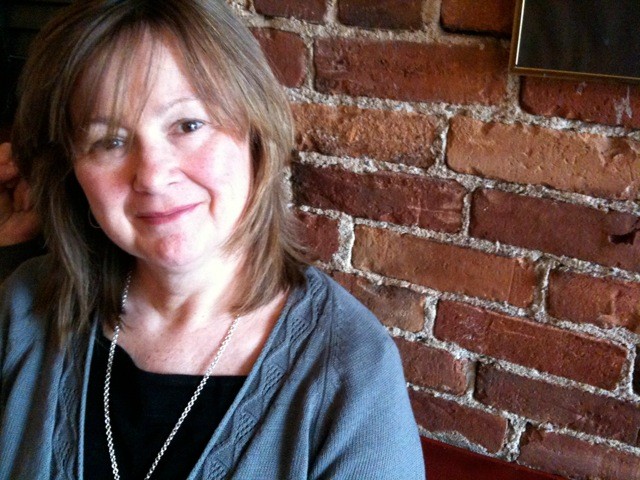
Ellen Synakowski launched a Threshold Choir in Washington, D.C. in January.
Synakowski's husband and one or two men come to each rehearsal, though most Threshold Choirs are made up of only women. They're located in nearly every major American city, and meet once or twice a month to practice. Each choir varies in its style and composition, though the majority skew older than 50 on average. They visit by request only to hospitals, hospices and private homes. The service is free, and because of limited resources, the groups usually don't advertise unless they are just getting started. Oftentimes, it's a chaplain, social worker or doctor who asks for them.
Four to six singers will go to a bedside, and they pick songs based upon what a patient or the patient's family wants. The tunes can be slow or upbeat, and emotional or lighthearted, like "Take Me Out to the Ballgame," though most are original. At first, choirs sing two or three songs to gauge a person's response. Sometimes, the recipient will move a finger, mouth a "thank you" or will change their breathing and relax their muscles. At the end of life, when human functions began to slow and cease, the signal for "I like this" can be as simple as a blink. Sessions last between 15 to 45 minutes, depending on the patient.
Family members are given song sheets so they can join in or continue after the singers are gone, though choir members themselves prefer memorization. The lyrics aren't religious, and are meant for those who may be spiritual but don't follow a strict dogma. It's rare for a choir member to witness a patient's last breath. Most people prefer to die alone or in the presence of family, say singers who have performed at deathbeds.
So far, Synakowski can sign just 10 pieces from memory. And while she has attended choir workshops in New York and Ohio, she has yet to sing to the dying. Searching fruitlessly for a choir since moving to D.C. nearly four years ago, she became tired of waiting and recently launched her own. Maybe she hadn't sung to the dying before, she thought, but she loved to sing, was taught by the pros and felt at ease with death.
When the D.C. singers gather, Synakowksi doesn't just train them in music, but peppers them with questions about the end of life. What role does song play in transitions? What do they want to hear in their last week alive? The aim is to steer their minds toward thinking about the death that will soon surround them, and to weed out the uncomfortable. She starts by sharing her own experience.
Growing up in Lincoln, Maine, she sang in nursing homes with her Girl Scout troop. She went to her first funeral, for her aunt who died of ovarian cancer, when she was in third grade, and has vivid memories of the open casket and the raw grief in her rather stoic family. She was in her high school's chorus, and was in a gospel choir as an adult until one of her vocal chords started to get chronically swollen about six years ago, making it tiring to sing for extended periods.
When her father died of a septic aneurism back home in 2000, she joined her siblings and mother in touching him, holding his cheeks, his legs and his feet, though she never thought to sing. When her mother was dying eight years later, Synakowski remembers rushing during the two-hour commute from the Bangor airport to her childhood home and spontaneously breaking out into song: "Swing low, sweet chariot/ Comin' for to carry me home." While singing, she got a call that her mother had died. It was one of the first times she realized "the transcending energy of music," she says.
"I feel almost responsible to show up and do this because I understand not being (alive)," she says.
Syankowski first heard about death choirs six years ago, when she lived in the San Francisco Bay Area, where the family moved for her husband's job as a physicist. She came across the idea the way most people do: through word-of-mouth. But between work and taking care of two kids, it wasn't until recently that she could manage the time to get involved.
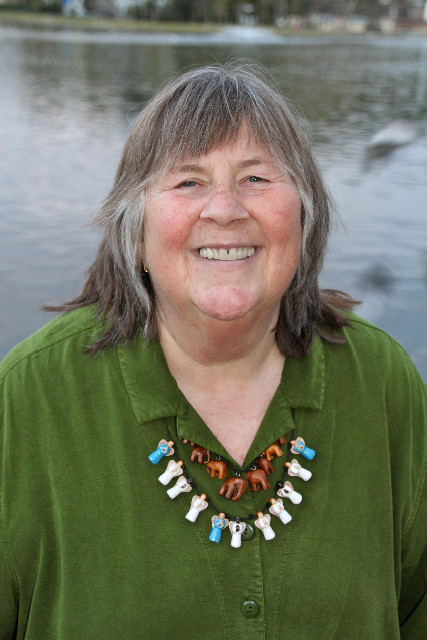
Kate Munger founded the Threshold Choir organization in 2001 in El Cerrito, Calif., and teaches workshops nationally about how to sing to the ill and dying. Today, 100 Threshold Choirs exist in the U.S. and Australia.
There are 19 choirs in Northern California, the epicenter of the deathbed singers' movement. They're each aided in one way or another by Kate Munger, the founder and executive director of Threshold Choir. A 63-year-old daughter of a minister who lives in Inverness, Calif., 40 miles north of San Francisco, she's a lifelong singer and former elementary school music teacher.
Munger, too, remembers the first time she realized the power of song at death. It was early November in 1990, when her close friend Larry was dying of AIDS.
"I found myself doing chores all morning and was supposed to sit by him in the afternoon, but was terrified when the time came," recalls Munger. "He was comatose but agitated."
She was upset, afraid and confused. So she did what she always did in times of trouble: She sang.
"I sang the same song for two-and-a-half hours. As soon as I started singing, he started to calm," she says. The song was Gail McDermott’s "Hello, Moon:" "There's a moon/ There's a star in the sky/ There's a cloud/ There's a tear in my eye/ There's a light/ There's a night that is long/ There's a friend/ There's a pain that is gone/ Long are we waiting awakening/ Long are we singing this song."
It took until 2000, and many years between of learning to read, write and teach music to kids, for the first choir to begin, in El Cerrito, Calif. Its first client was a terminally ill friend in her 50s with Lupus. Split into small groups, the original 15 members sang to her weekly in the nine months before she died, and she gave them feedback. Soft, blended voices felt better, she explained. Singers learned to read her body language. Even the smallest twitch of a limb could mean she was enjoying or put off by the music. At her death, they sang to her for hours on end.
Today, Munger leads Threshold Choir full-time as a registered nonprofit. It has a small part-time staff, 100 chapters across the U.S. and one in Australia, and a repertoire of 500 original songs written in a dozen languages. Most are no more than two minutes long, and have been composed at annual camps that members organize in Northern California. The most recent one in April at a retreat center in Sonoma County drew 140 women. The titles of songs written and sung during those five days invoke wonder, ease and tenderness: "Welcome Home," "May Peace be with You," "What Light Do You Shine in the World."
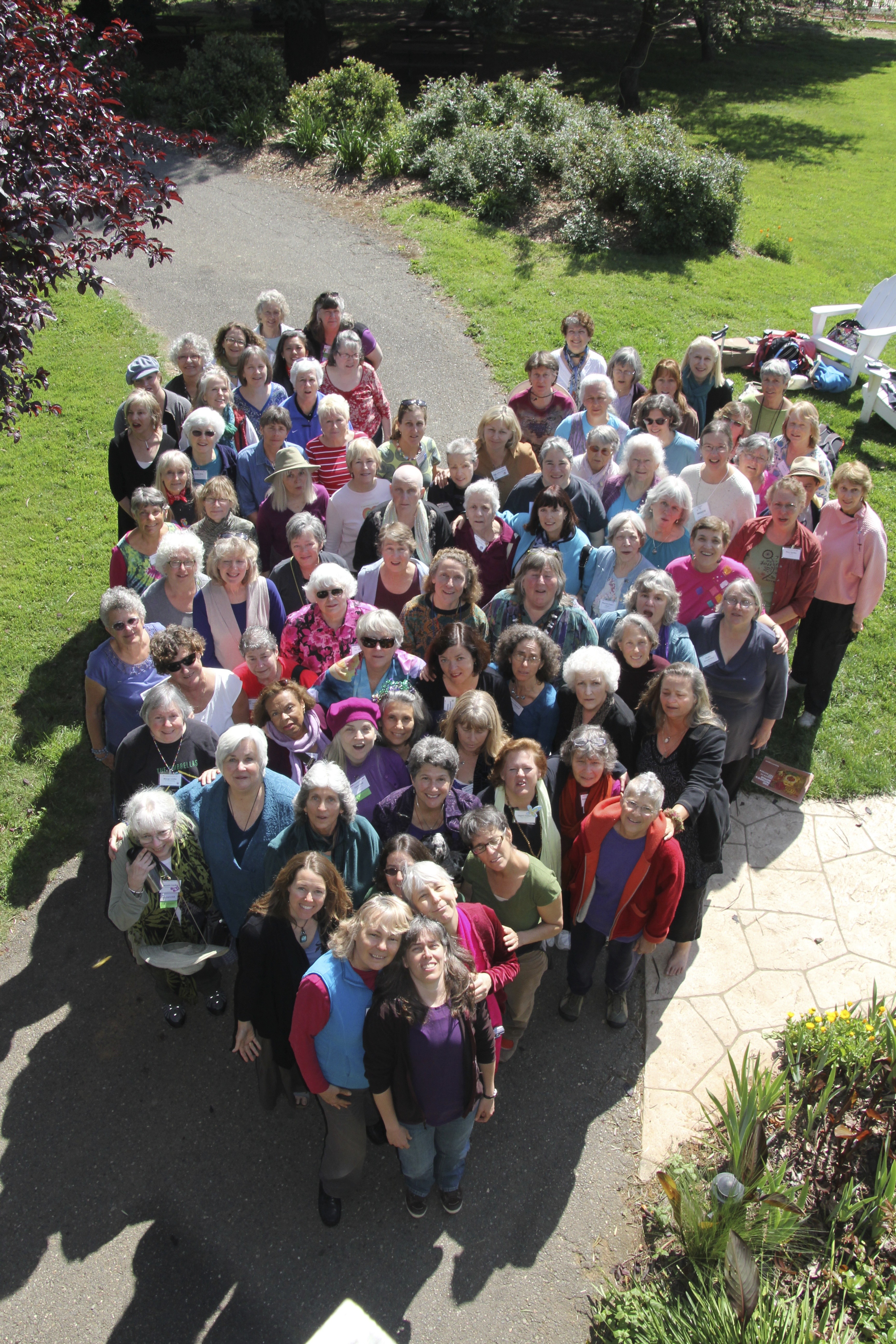
In early April, 140 Threshold Choir singers gathered for five days at The Bishop's Ranch, a retreat and conference center in Healdsburg Calif., for the network's annual gathering, where they wrote and sang new and old songs.
"There is no audition process to join. All I ask is that you feel the shiver when you hear about our work," says Munger. "A mother's heartbeat is the first sound that each of us hears. It feels to me that women's bodies are the guardians of life entering this world and it feels right that we will be guardians of the gate out."
Experienced soloists are discouraged from taking part because they would take the attention away from the patient. Instead, Munger, Synakowski and other choir leaders encourage those who like to sing but lack professional experience to join. It's easier to teach them to mix their voices into the group's, sing softly and focus on the dying instead of themselves. ***
The Threshold Choirs' ultimate purpose may not be a creative one, but one that's psychosocial. One of the hardest parts of dying, say those who have been at bedsides or been close to death themselves, is not pain but of the unfamiliar -- of a stopping point -- even for those who believe in an afterlife. Feelings of guilt and regret, too, can stress the body and mind.
While bedside singers may be unique in American culture, it's not unprecedented. In some Hindu and Buddhist practices, hymns are sung near those who are dying, while mantras are chanted into the ear at the moment of death. In the Middle Ages, French Benedictine monks became famous for establishing infirmaries across Europe for the terminally ill, where they used Gregorian chants to soothe the dying. In more advanced hospitals and hospices around the nation, music therapists are employed to use instruments, such as harps, to calm the ill. And an emerging academic and medical field, music thanatology, is studying the effects frequency and tone have on a dying person, from changes in heart rate, temperature and respiration to better sleep and reduction in stress. Studies that have scanned brain waves near the time of death have indicated that hearing is one of the last senses to be lost.
"Our culture is coming to a great awareness of the role of song and music when it comes to pain, death and grief," says Joy Berger, who teaches in the music therapy program at the University of Louisville and is the director of education for Hospice Education Network.
Diana Sebzda, the director of bereavement at the Karen Ann Quinlan Hospice in Newton, N.J., says she has often seen music used for terminally ill patients. It seems "to bring about a sense of peace to the dying by calming down their terminal restlessness and for the family bedside," she says. "Often, the hospice team will request the music continue to play, even after the loved one has died, because it helps create an emotional environment to respect the transition period of the loved one who died."
But deathbed songs can also go wrong. Research is still being done on how music affects the dying, says Berger. "Especially if the musicians are not clinically trained music therapists, assumptions and mis-uses of music can occur with ... what music is selected, and outcomes to expect."
"Music should never be imposed upon another, but rather should be empowering with and for the dying person. And, the same power of music to engage one's emotions, memories, and memories can ignite overwhelming pain," Berger says.
Some of the most traditional or least-equipped hospitals and hospices still don't have music-therapy programs, let alone a relationship with deathbed singers. And the cooperation and interest among medical staff varies when it comes to Threshold, though personnel are typically asked to listen in and the choirs' songbooks include appreciation songs for nurses and doctors. Once at a hospital in California, says Munger, two of her singers were pushed to sing for a patient who was in pain by a "desperate" nurse, even though they had not been invited. "So they started singing for Mr. Jones who sat bolt up in bed and ordered them out." ***
While more experienced choirs have seen broad success in gaining membership and clientele, it's a struggle for the newcomers in D.C. People come and go. Synakowski and her husband, Ed, are the constants, though others have started to come more regularly. She says local hospitals and hospices have be "very receptive" to the idea, thought she still doesn't know who, exactly, the choir will sing to.
"You can't just go around saying you are singing to people who are dying in beds. Some people are very uncomfortable with it," Synakowski says. "I'm confused about how to market it."
When she's asked to explain what she does or when she makes a flyer, she leaves the concept a vague: "We sing to people at tender times."
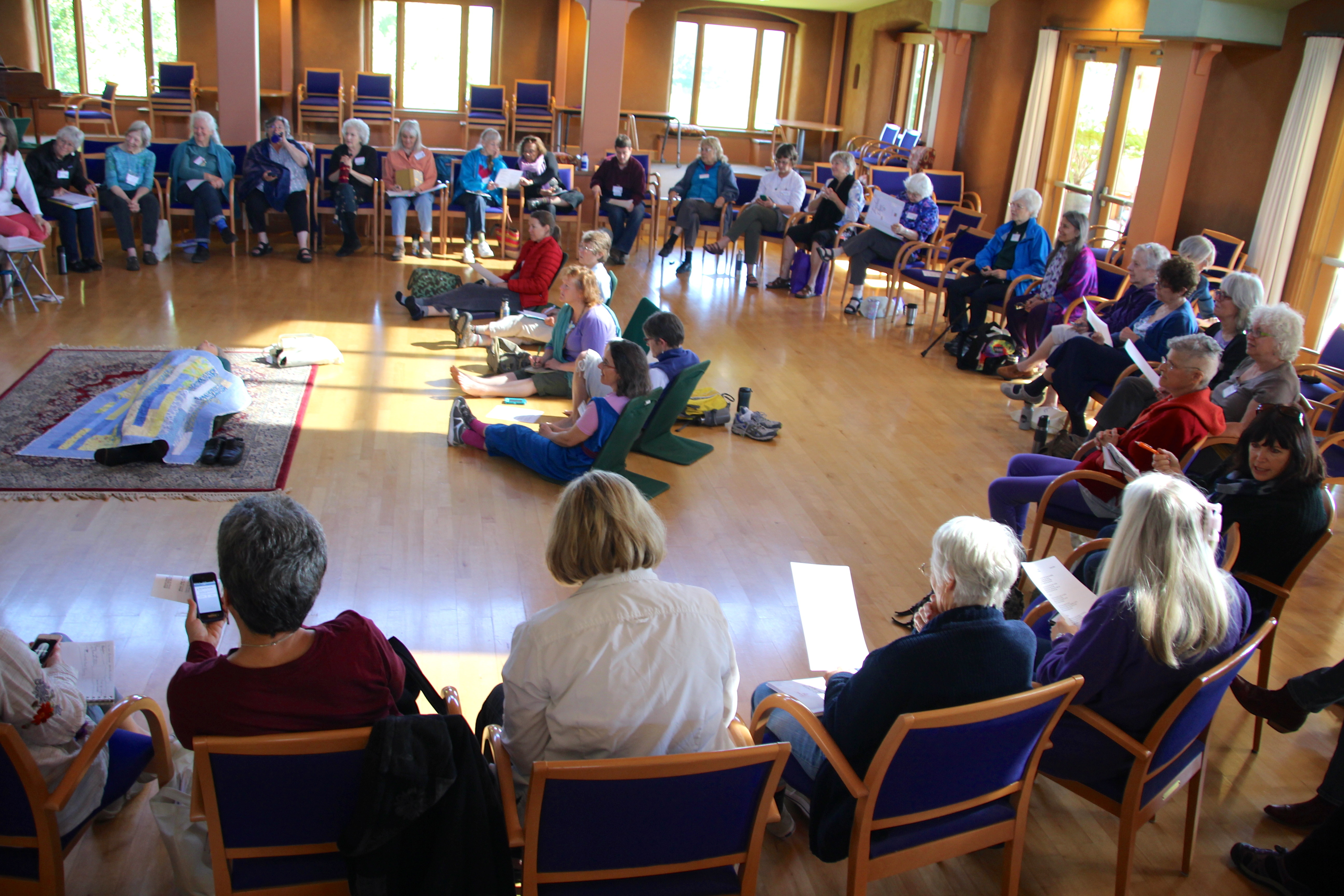
Singers practice at the Threshold Choir national conference in Healdsburg, Calif., in early April.
With a group so focused on the dying, its rehearsals are often equally meditations and conversations on death as they are chances to harmonize. In the middle of the April practice, Synkowski asked singers to reflect on the role of music in transitions and what led them to the music and the dying.
Laureen Gastón, the acupuncturist who found one of Synakowsi's flyers at Starbucks, talked about her mother and sister, who died four weeks apart a year ago. She first learned of Threshold Choir songs last summer while attending a community singing group at church during a vacation in Maine. "At the time, I thought that the idea of a Threshold Choir was intriguing given my latest losses and how much I sang at their bedsides. It made sense that others would do the same for their loved ones, but to hear about an organized group was news. Last night, I found myself singing those songs, and it transported me right back there to the ones I love," Gastón said.
"My brother had died from cancer. His favorite song was called 'Change,' and back when he was in high school he had a senior quote which was from the song, it was amazing how fitting it was," said Leah Dick, a massage therapist who wants to specialize in serving cancer patients. "I sing that song over and over and over again" to remember him.
Synakowski thought of her son, Byron, who was born Sturge-Weber Syndrome, a rare neurological condition that usually affects one side of the brain. A port-wine stain on his forehead signaled the condition, which was caused by vascular malformations. Byron suffered hundreds of seizures within less than a year after his birth that resulted in 11 hospitalizations. Doctors had to remove half his brain when he was 10½ months old, and he could have easily died from bleeding during the surgery or a stroke afterwards. It was 1997, and she now realizes it was then that her path in death and song really began.
"I told them they didn't have permission to keep him alive if he did not want to be here," says Synakowski. She would touch his small hands, holding him in her lap before and after treatments, lulling him to sleep with what she knew could be the last words he would hear: "This little little light of ours/ We're going to let it shine/ ... We won't let anyone (blow) it out / We're going to let it shine."
He survived and is now a high school sophomore. Though weak on one side of his body, he enjoys playing volleyball, and is close to becoming an Eagle Scout.
"Going through that baptism, it enables me to say I can go in there and be with a child who is suffering," she says.
Recently, Synakowski has started calling pediatric hospitals, asking if they would be interested in allowing song in their checkup rooms. "It made me comfortable with the idea that babies' lives can end. It's not just older people. People always say phrases like 'his time was cut short' and things like that. I think we are giving a certain amount of time on this earth, and that's that. It's the time we have to live."
*****************************************
Friday, April 12, 2013
Our God is an Awesome God!!!!
Praise the Greatness of our God!
He is the Rock His works are perfect, all His ways are just. Deut 32:3-4
1.0 INTRODUCTION
When it comes to holiness we often think in negatives. The first thing that comes to our minds is the absence of sin. But to reduce holiness to the absence of sin is like reducing light to the absence of darkness. Holiness is a wonderful and powerfully positive attribute of God. It defines all that he is and all that he does. He is 'The Holy One'. It is the attribute of attributes. The holiness of God is the blinding radiance of his very essence, brighter than the sun shining in all its brilliance. This study looks at 5 aspects of the holiness of God
2.0 SEPARATE – GOD IS NOT LIKE US
Both the Hebrew word 'Qodesh' and the Greek word 'Hagios' which are translated as 'Holiness' in the Bible carry with them the root meaning: 'cut-off' or 'separate'. When applied to God this means that God is separate from the rest of creation. God is not like us, he is above and beyond all our creation-bound thoughts, experiences and imaginations. Isa 55:8-9 "For my thoughts are not your thoughts, neither are your ways my ways," declares the LORD. "As the heavens are higher than the earth, so are my ways higher than your ways and my thoughts than your thoughts" Isa 40:25-26 "To whom will you compare me? Or who is my equal?" says the Holy One. Lift your eyes and look to the heavens: Who created all these? He who brings out the starry host one by one, and calls them each by name.
Because of his great power and mighty strength, not one of them is missing." 1Ti 6:15b-16a God, the blessed and only Ruler, the King of kings and Lord of lords, who alone is immortal and who lives in unapproachable light, whom no-one has seen or can see.
2.1 Communicable or Incommunicable?
In this sense Holiness embodies the 'Incommunicable' attributes of God – those which man cannot reproduce in himself. The ways in which God is separate or 'other' to us: His omniscience, his omnipresence, the mystery of his being – spirit, three-in-one, eternal in existence, transcending time and space. And yet holiness itself is a 'Communicable' attribute of God! It is part of those attributes in which man can be like God: just, good, loving, merciful etc. We have been made holy, and we are in the process of becoming holy. When describing the attributes of God; holiness is often referred to as the "attribute of attributes" because it embodies them all, both incommunicable and communicable. All that God is and all that he does is holy. Holiness is also where these two types of attributes of God meet, as it is itself both incommunicable and communicable. This can been seen by these three seemingly contradicting statements about holiness in the scriptures:
Only God is holy
Rev 15:4 Who will not fear you, O Lord, and bring glory to your name? For you alone are holy.
We are already holy
Heb 10:10 We have been made holy through the sacrifice of the body of Jesus Christ once for all.
We need to become holy
Heb 12:14 Make every effort to live in peace with all men and to be holy; without holiness no-one will see the Lord. These are not contradictory, but just go to illustrate how much holiness covers. It represents the unique nature of God that he alone has that we cannot obtain. It represents the communicable attributes of God to which we must obtain, and it represents the closeness to God and the belonging to him that is already ours in Christ. Holiness is thus a multifaceted jewel, so much more than just the absence of sin.
3.0 SACRED – GOD IS WORTHY OF HONOUR AND REVERENCE
Another definition of both the Greek and Hebrew biblical words for holiness is: hallowed, venerated, worthy of honour, sacred or simply "divine". It speaks of the awesome majesty of the creator. Again we see that holiness is the essence of the divine. This is borne out in scripture where 'holy' and 'divine' are used interchangeably, and where the fact that God is holy is inseparable from his awesome glory and his worthiness to be praised.
Da 4:9 - I know that the spirit of the holy [divine] gods is in you, and no mystery is too difficult for you.
Isa 52:10 - The LORD will lay bare his holy [divine] arm in the sight of all the nations, and all the ends of the earth will see the salvation of our God.
Ps 103:1 - Praise the LORD, O my soul; all my inmost being, praise his holy [divine] name.
Isa 6:3 - "And they were calling to one another: "Holy, holy, holy is the LORD Almighty; the whole earth is full of his glory."
Ps 22:3 - You are holy, enthroned in the praises of Israel.
Rev 4:8-11 - Each of the four living creatures had six wings and was covered with eyes all around, even under his wings. Day and night they never stop saying: "Holy, holy, holy is the Lord God Almighty, who was, and is, and is to come." Whenever the living creatures give glory, honour and thanks to him who sits on the throne and who lives for ever and ever, the twenty-four elders fall down before him who sits on the throne, and worship him who lives for ever and ever. They lay their crowns before the throne and say: "You are worthy, our Lord and God, to receive glory and honour and power, for you created all things, and by your will they were created and have their being."
People and places can be holy or sacred in this way too, but not in their own right, only as a result of closeness to God who is the only source of holiness. Moses was commanded to take off his shoes because he stood on holy [sacred] ground. There was nothing special about that particular stretch of desert, except it was where God was present. The tabernacle had holy [sacred] things and a holy and most holy place. But again this was not a holiness intrinsic to the objects or places themselves but due to the proximity to the very presence of God. As Christians we are a holy people because God is not just close to us, but within us! We are participants of the divine nature! (2Pe 1:4)
4.0 SINLESS – ABSOLUTE MORAL PURITY AND PERFECTION
Having said that holiness is much more than the absence of sin, we cannot study holiness without taking the moral aspect of it into consideration. But even here God's moral holiness is not just the negative avoidance of sin, it is equally to do with the positive affirmation of all that is good. God's moral holiness means that he is utterly flawless and perfect in all his ways, not only in what he does not do (avoidance of sin) but also in all that he does do – all that he does is just, true, good, loving and pure.
Some people's image of holiness is like a hermit in a cave who avoids all temptation, is free from all evil, and commits no sin. However the scripture makes it clear that holiness is absent not only when we do evil, but also when we don't do good! God's holiness is thus equally demonstrated by his separation from all that is impure and his wrath towards all that is wicked and evil, and also in his closeness and binding love to all who do good and seek to follow in his ways. 1Jn 1:5 God is light; in him there is no darkness at all.
Heb 1:9 - You have loved righteousness and hated wickedness; therefore God, your God, has set you above your companions by anointing you with the oil of joy.
Jas 1:17 - Every good and perfect gift is from above, coming down from the Father of the heavenly lights, who does not change like shifting shadows.
Jas 4:17 - Anyone, then, who knows the good he ought to do and doesn't do it, sins. This is part of the communicable aspect of God's holiness. God wants us to be holy as he is holy. To have the same hatred of sin, and love of righteousness that he has. To have the same purity and love in all our thoughts, words and deeds. This however is part of the process of sanctification, it is not something we get the instant we are saved but something that we need to work at: constantly and daily. Although we have the Holy Spirit within us, who helps us to become holy, we also have the flesh – our natural carnal selfish desires that pull us in the opposite direction. To live to God requires death to self.
1Pe 1:15-16 - But just as he who called you is holy, so be holy in all you do; for it is written: "Be holy, because I am holy."
2Co 3:18 - And we, who with unveiled faces all reflect the Lord's glory, are being transformed into his likeness with ever-increasing glory, which comes from the Lord, who is the Spirit.
Gal 5:16-17 - So I say, live by the Spirit, and you will not gratify the desires of the flesh. For the flesh desires what is contrary to the Spirit, and the Spirit what is contrary to the flesh. They are in conflict with each other, so that you do not do what you want.
Lk 9:2 - Then he said to them all: "If anyone would come after me, he must deny himself and take up his cross daily and follow me."
5.0 SET APART – BELONGING EXCLUSIVELY TO GOD
There is one other biblical definition of holiness, but I have left it to the end because it is more related to people and things than to God himself who quite rightly is the main focus of our study. That definition is: set apart, consecrated, given over to exclusive use for God. This is how the objects in the temple were holy, because they were only used in service to God. This is how the Nazarites were holy, because they took a vow to serve God, and to engage in no other activity for a set period of time. In this way we too can be holy if we consider that we are no longer our own, we belong to God. We exist exclusively for his use, and we will not engage in any activity outside of his will.
1Co 6:19-20 - Do you not know that your body is a temple of the Holy Spirit, who is in you, whom you have received from God? You are not our own; you were bought at a price. Therefore honour God with your body.
Ro 6:13 - Do not offer the parts of your body to sin, as instruments of wickedness, but rather offer yourselves to God, as those who have been brought from death to life; and offer the parts of your body to him as instruments of righteousness.
2Ti 2:4 - No one serving as a soldier gets involved in civilian affairs--he wants to please his commanding officer. In a way this does relate to God's holiness too because he is utterly committed to his own glory and purpose. He never takes a vacation to go fishing or to oversee some other universe. The plan that he has put into effect through his son is his one consuming passion. God is consecrated to himself, set apart for his own will. He acts exclusively to forward his own honour and glory.
Ps 121:14 - He who watches over Israel will neither slumber nor sleep. Eze 39:25 I will be zealous for my holy name.
Jn 6:38 - For I have come down from heaven not to do my will but to do the will of him who sent me.
6.0 THE STANDARD – GOD DOES NOT CONFORM TO A STANDARD HE IS THE STANDARD
Of course the ultimate definition of Holiness is God himself. He is not holy because he adheres to some standard. He himself is the standard. Holiness is the essence of his being. He is holy because he is holy. Thus to be holy is to be like God. There is no other standard given to be holy – you must be holy as God is holy.
Mt 5:48 - Be perfect, therefore, as your heavenly Father is perfect. He is also the source of all holiness. There is no other source. Anything or anyone that is holy is not so in itself, but because it is close to, consecrated to, or reflects the character of God himself. The reason we can be holy is because he is holy and his Spirit lives in us.
Lev 11:4 - I am the LORD your God; consecrate yourselves and be holy, because I am holy.
Lev 20:8 - I am the LORD, who makes you holy. Holiness is the essence of the divine, and our divine calling in Christ.
1Co 1:2 - To those sanctified in Christ Jesus and called to be holy, together with all those everywhere who call on the name of our Lord Jesus Christ-- their Lord and ours.
*****************************************************This article is Unit 2 of a 7 part series on THE GREATNESS OF GOD!
http://www.holiness.org.uk/awesomeholy.html
Subscribe to:
Posts (Atom)