Showing posts with label Passover. Show all posts
Showing posts with label Passover. Show all posts
Sunday, March 31, 2013

Saturday, March 30, 2013
Sunday, March 24, 2013
How Easter and Passover Can Make Your Family Happier

Over the next week, tens of millions of people will do something so familiar it's easy to forget how radical it is: They will commemorate the worst moments of their past. For Jews, the occasion is Passover, in which they relive their four centuries of slavery in Egypt. For Christians, the occasion is Easter, in which they painstakingly mark the trial and crucifixion of Jesus.
Sure, both stories come around to happier endings. The Bible says the Israelites ultimately escape slavery, and Jesus is ultimately resurrected. But the larger question is still worth considering: What rightful people put their most ignoble days at the heart of their identity?
The answer: a people that wants to survive.
I spent the last few years trying to figure out the secret sauce that keeps families strong, effective and resilient. I talked to cutting-edge scholars, innovative brain researchers, leaders of business, sports and religion, as well as countless everyday moms and dads, who, like me, were struggling so mightily to get through every day we had no time to ask the larger question of how to teach our children values. In effect I was trying to find out: What do happy families do right, and what can I learn from them to make my family happier?
The good news is there is lots of knowledge these days to answer that question. I lay out what I found in "The Secrets of Happy Families," a playbook for contemporary families, covering everything from rethinking mornings to revamping dinner to rejuvenating date night. But of all the counterintuitive ideas I encountered, one, above all, changed my view of parenting -- and of religion.
The most successful families embrace and elevate their family history, particularly their failures, setbacks and other missteps. In 2001, two researchers at Emory, Marshall Duke and Robyn Fivush, gave 400 children a simple test about their family's past. Do you know where your grandparents were born? Do you know where your parents went to high school?
Do you know an aunt or other relative who had an illness they overcame. They also gave them a battery of other psychological tests.
The children who knew more about their family's history had higher self-esteem, a stronger sense that they controlled their lives, and a deeper belief that their family functioned well. The "Do You Know?" scale, as the researchers dubbed it, turned out to be the best single predictor of children's emotional health and happiness.
"We were blown away," Dr. Duke told me.
Two months later came Sept. 11. Though the families lived far away, all the children had experienced the same anguish in the same way. The researchers reassessed the children. "Once again," Dr. Duke said, "the ones who knew more about their families proved to be more resilient, meaning they could moderate the effects of stress."
Why does being aware of your family's history help children in times of stress?
"The answers have to do with a child's sense of being part of a larger family," Dr. Duke said. Psychologists have found that every family has a unifying narrative, and they tend to take one of three shapes. First, the ascending narrative: We had nothing; we worked hard; now we have a lot. Second, the descending narrative: We had a lot; then there was a recession, a war, a storm; we lost it all. Third, an oscillating narrative: We worked hard; we achieved some success; but then your grandfather lost his job; we rallied as a family and came back; but then your aunt developed a drinking problem.
Dr. Duke said that children who have the most self-confidence have what he and Dr. Fivush call a strong "intergenerational self." They know they belong to something bigger than themselves.
And that's where religion comes in. One of the core ideas of the Bible is that meaning can be found in history. The sheer act of telling and retelling stories helps us to understand God's role in the world as well as our own position in a long line of ancestors who have wrestled with similar issues to the ones we wrestle with every day. So when Jews relive the
Passover seder as their ancestors have done for thousands of years or Christians recreate the final steps of Jesus as their forebears have done for centuries, we are directly extending a line from our children to their past.
And the fact that those traditions include moments of hardship makes them even more memorable. As Dr. Duke has found, the best single thing you can do for your children is create, refine and retell the story of your family's positive moments and your ability to bounce back from the difficult ones. That will give your children confidence that when they encounter hurdles, they can push through as well. The fact that Passover and Easter elevate suffering to a core part of the story helps those celebrating to draw closer to one another and to better prepare themselves for their own ups and downs.
The bottom line: If you want a happier family, bring those skeletons out of the closet. Celebrate your family's bleakest moments and how your relatives overcame them. In doing so, you will encounter darkness, but you'll give your children the confidence that they, too, shall overcome.
Bruce Feiler is the author of six New York Times bestsellers, including Walking the Bible and Abraham. This piece is adapted from his latest book, The Secrets of Happy Families: Improve Your Mornings, Rethink Family Dinner, Fight Smarter, Go Out and Play, and Much More, which was just published.
Thursday, March 21, 2013
He Was Nailed To The Cross For Me
This post is in memory of my mother, Ivy. I recall this song was a favorite of hers.
I love you mom, and I miss you every day.
Easter
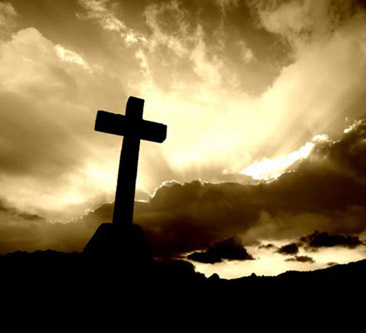
Easter, which celebrates Jesus Christ's resurrection from the dead, is Christianity's most important holiday. It has been called a moveable feast because it doesn't fall on a set date every year, as most holidays do. Instead, Christian churches in the West celebrate Easter on the first Sunday following the full moon after the vernal equinox on March 21. Therefore, Easter is observed anywhere between March 22 and April 25 every year. Orthodox Christians use the Julian calendar to calculate when Easter will occur and typically celebrate the holiday a week or two after the Western churches, which follow the Gregorian calendar.
The exact origins of this religious feast day's name are unknown. Some sources claim the word Easter is derived from Eostre, a Teutonic goddess of spring and fertility. Other accounts trace Easter to the Latin term hebdomada alba, or white week, an ancient reference to Easter week and the white clothing donned by people who were baptized during that time. Through a translation error, the term later appeared as esostarum in Old High German, which eventually became Easter in English. In Spanish, Easter is known as Pascua; in French, Paques. These words are derived from the Greek and Latin Pascha or Pasch, for Passover. Jesus' crucifixion and resurrection occurred after he went to Jerusalem to celebrate Passover (or Pesach in Hebrew), the Jewish festival commemorating the ancient Israelites' exodus from slavery in Egypt. Pascha eventually came to mean Easter.
Easter is really an entire season of the Christian church year, as opposed to a single-day observance. Lent, the 40-day period leading up to Easter Sunday, is a time of reflection and penance and represents the 40 days that Jesus spent alone in the wilderness before starting his ministry, a time in which Christians believe he survived various temptations by the devil. The day before Lent, known as Mardi Gras or Fat Tuesday, is a last hurrah of food and fun before the fasting begins. The week preceding Easter is called Holy Week and includes Maundy Thursday, which commemorates Jesus' last supper with his disciples; Good Friday, which honors the day of his crucifixion; and Holy Saturday, which focuses on the transition between the crucifixion and resurrection. The 50-day period following Easter Sunday is called Eastertide and includes a celebration of Jesus' ascension into heaven.
In addition to Easter's religious significance, it also has a commercial side, as evidenced by the mounds of jelly beans and marshmallow chicks that appear in stores each spring. As with Christmas, over the centuries various folk customs and pagan traditions, including Easter eggs, bunnies, baskets and candy, have become a standard part of this holy holiday.
********************************************************
Courtesy of http://www.history.com/topics/history-of-eastery of
Subscribe to:
Posts (Atom)